
The history behind this song
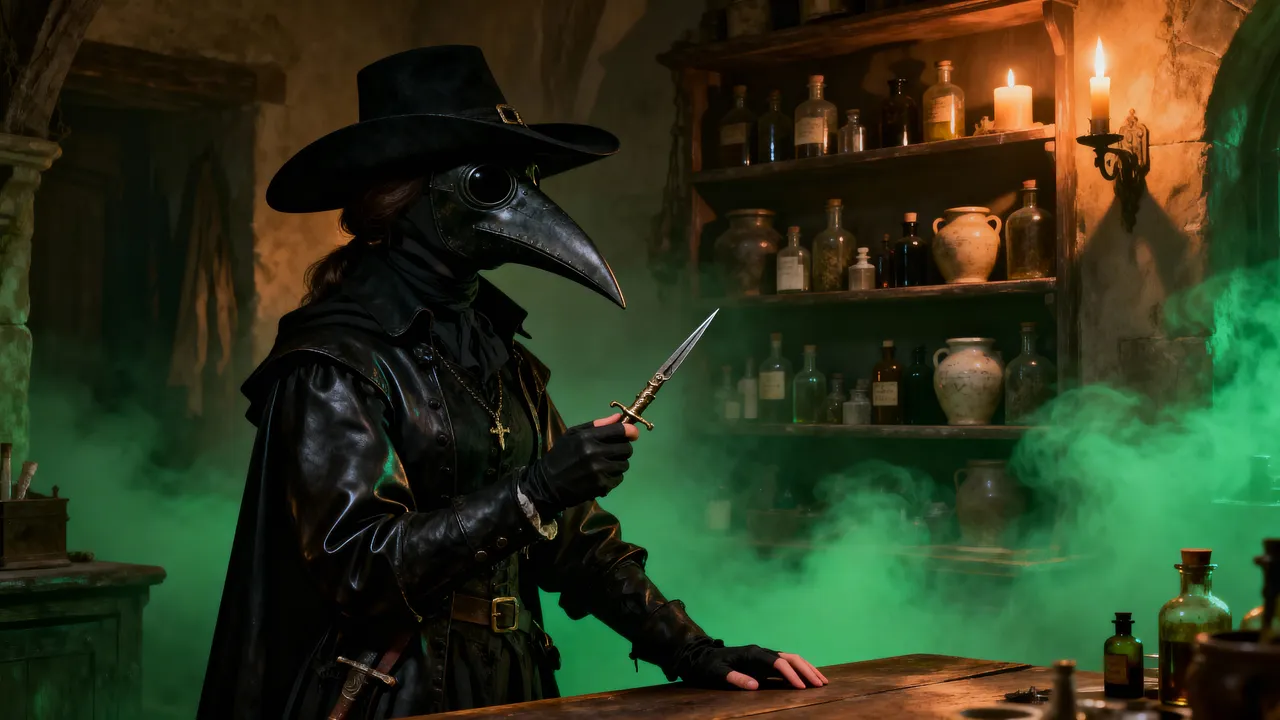
The Dark Turning Point Having discovered forbidden knowledge that revealed the horrifying truth, the plague doctor continues their brutal medieval work—but now with agonizing self-awareness. Each lancet cut, each leech applied becomes torture dressed as healing. The mounting guilt and horror of bloodletting, mercury poisoning, and trepanning will soon drive them to embrace dark powers completely...
What to Expect. Neoclassical shred guitar solos showcasing virtuosic technical mastery Fast-tempo progressive metal with intricate rhythmic complexity Dramatic operatic female vocals delivering brutal self-awareness Medieval medical horror brought to life through symphonic intensity Industrial percussion suggesting surgical instruments and bloodletting tools
The Medical Horror: This song confronts the brutal reality of 1665 plague medicine: bloodletting to "balance the four humors," toxic mercury treatments, cauterizing buboes with fire, and trepanning skulls to "release demons." The doctor's horrified realization—"The cure is worse than the disease they bear / I bleed them dry and call it care"—captures the tragic moment when medical training becomes recognized torture.
Historical Context: Medieval physicians genuinely believed in humoral theory and miasma. Their treatments—while brutal—were rooted in the best medical knowledge of the era. This song honors the tragedy of well-meaning healers whose methods actually hastened death.
The narrative arc: Following the supernatural revelation in "The Forbidden Text," the doctor now sees traditional medicine for what it truly is—medieval brutality. This mounting horror and guilt will push them to cross the final threshold into dark power.
Musical Style: Neoclassical Progressive Metal in the tradition of Symphony X and Yngwie Malmsteen, blended with the dramatic theatricality of Nightwish. Features fast shred-style guitar solos, complex keyboard arpeggios, powerful rhythm section precision, and soaring operatic vocals delivering the doctor's anguished confession. The industrial percussion creates the atmosphere of a medieval surgery, metallic clanging suggesting lancets, saws, and cauterizing irons. The tempo builds from clinical brutality to horrified realization.
What medieval "cure" horrifies you most?