Figure in this songHathor
The myth behind this song
The doors of Dendera only open to the dancing.
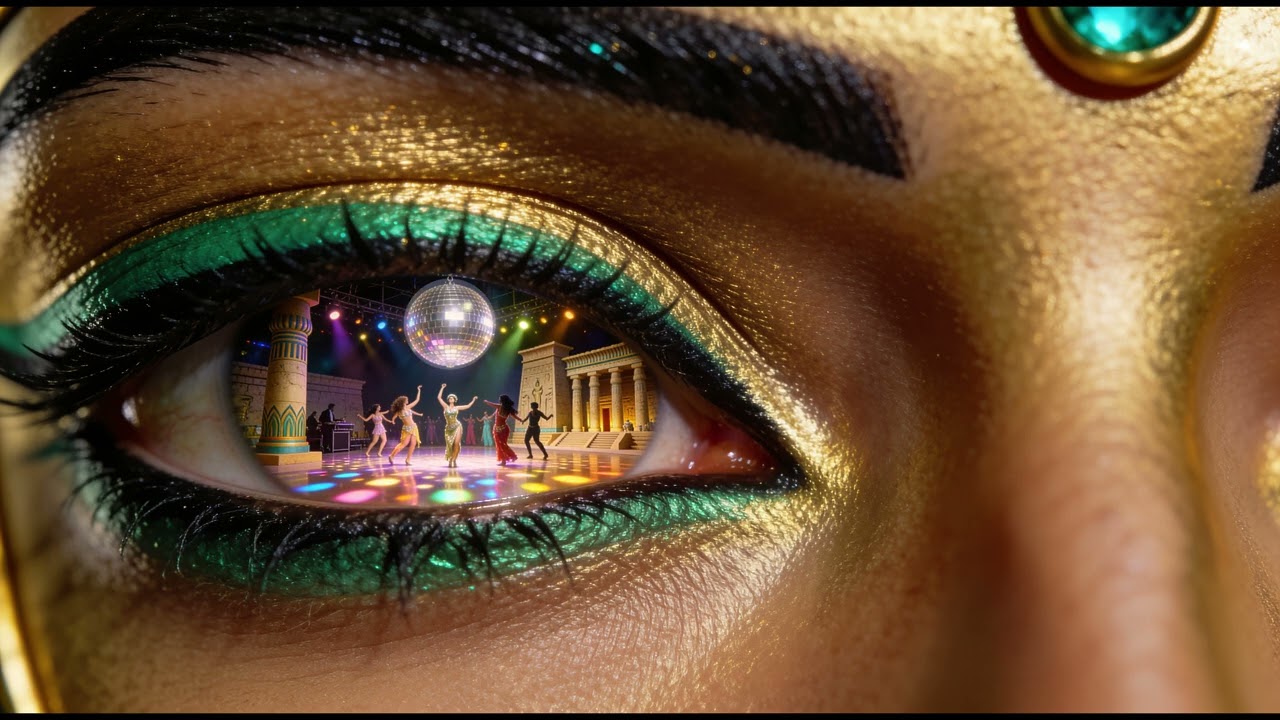
In ancient Egypt, the goddess Hathor was worshipped through ecstasy. The Festival of Drunkenness at her temple in Dendera drew worshippers from across the kingdom — they drank date wine, played the sistrum, beat the frame drum, and danced until they collapsed in the sacred courtyard called the Porch of Drunkenness. The intoxication wasn't recreational. It was theological. Hathor revealed herself only to those who had drunk and danced themselves into ecstatic vision.
The festival was a reenactment of the Distant Goddess myth — Hathor fled to Nubia in fury, and the priests sang her back to Egypt with music, wine, and dance. Every year the priestesses brought her home again. Every year the kingdom got drunk on her behalf.
This song reimagines that festival through 1978 Munich Sound — the era of Boney M and Frank Farian production, when European disco treated mythology as sequined spectacle. Bright disco strings, relentless four-on-the-floor kick, hand claps on every beat, female trio harmonies, and a male spoken-word narrator-priest threading the historical detail through the groove. The sistrum and frame drum forward in the mix. The temple as nightclub. The goddess as headliner.
This is not solemn Egyptian mythology. This is mythology as it was actually practiced — sweaty, ecstatic, communal, festive. The kind of religion you danced into instead of prayed into.
The second pilot from the Hieroglyphs of the Dial album direction, following Anubis in 1980s goth rock. Egyptian mythology paired with the genres nobody thought to give it. Mythology in unexpected genres. The pairings nobody else makes.
Like or comment on YouTubeSubscribe